Warren Buffett Steps Down After Six Decades at Berkshire
One of the greatest investing careers in history enters its final chapter as stocks finish a turbulent week mixed, Treasury yields touch 5%, and Bitcoin surges back above $80,000.
Topics: Stocks
KEY POINTS
Warren Buffett stepped down as Berkshire Hathaway chairman, ending more than six decades at the top of the company.
Stocks finished mixed: the Nasdaq gained 0.40% and S&P 500 rose 0.17%, while the Dow slipped 0.18%.
The 10-year Treasury yield reached roughly 5%, keeping pressure on valuations after this week's Fed rate hike.
Bitcoin jumped 5.9% to roughly $81,000, sending Coinbase, Robinhood and Strategy sharply higher.
MARKET SNAPSHOT
Market | Close | Today |
|---|---|---|
Nasdaq | 26,522.54 | 🟢 +0.40% |
S&P 500 | 7,650.50 | 🟢 +0.17% |
Dow | 51,682.64 | 🔴 -0.18% |
10-Year Treasury | 4.998% | 🔺 +5 bps |
Oil | $95.67 | 🔴 -1.60% |
Bitcoin | $81,015 | 🟢 +5.90% |
The quick read: Stocks started Friday strong before giving back some of their gains as Treasury yields climbed. The Nasdaq still managed to finish higher, while the Dow ended its third consecutive losing week.
But the biggest investing story Friday wasn't the S&P 500.
It was Warren Buffett.
Buffett's Era at Berkshire Is Ending
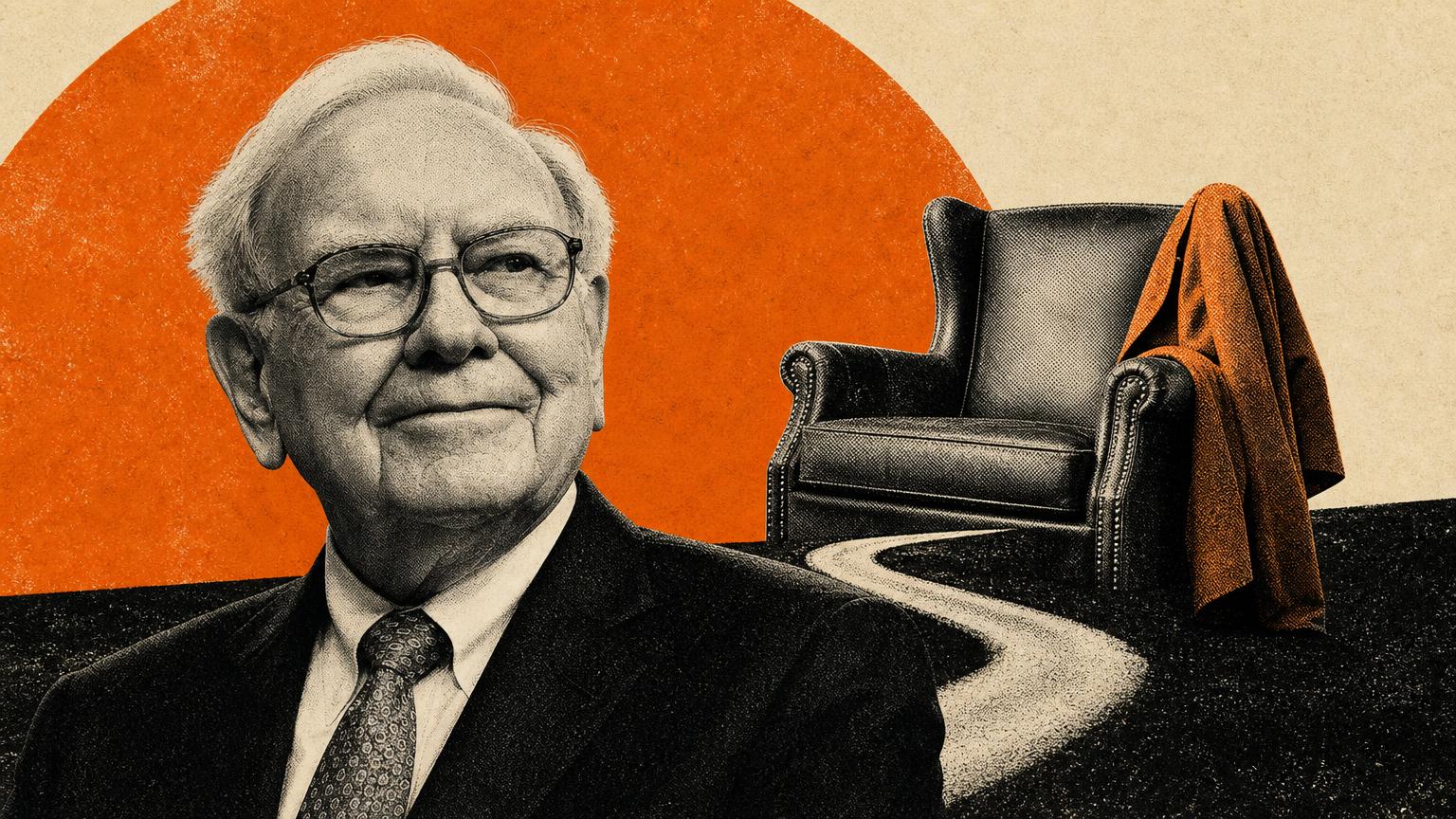
After more than six decades building one of the most successful companies in American history, Warren Buffett stepped down Friday as chairman of Berkshire Hathaway.
Buffett, now 96, will become chairman emeritus and remain on Berkshire's board.
His eldest son, Howard Buffett, will become non-executive chairman.
Greg Abel, meanwhile, remains CEO after taking over that position earlier this year.
It's an important distinction.
Howard Buffett isn't replacing Warren as Berkshire's chief investment decision-maker.
His primary job will be protecting the culture Warren Buffett spent decades creating.
Abel will continue running the business.
Why this matters to investors
Buffett's departure closes another chapter in an extraordinary transformation.
He took control of what was essentially a struggling textile operation and turned Berkshire into a conglomerate worth roughly $1.1 trillion.
Today, Berkshire owns businesses spanning insurance, railroads, utilities, manufacturing and retail while also holding a massive stock portfolio.
But Buffett's real legacy may be the investing philosophy he popularized:
Buy great businesses.
Don't overpay.
Think in decades instead of quarters.
And let compounding do the heavy lifting.
The question facing Berkshire now is whether that philosophy can survive without Buffett sitting at the top.
Berkshire has been preparing for this
This isn't a surprise transition.
Abel has spent years preparing to run Berkshire and has already assumed responsibility for many of its most important decisions.
Howard Buffett has served as a Berkshire director since 1993.
That gives the company something investors generally appreciate during a leadership transition:
continuity.
Still, there is one part of Warren Buffett that can't simply be handed to a successor.
His ability to allocate enormous amounts of capital.
Berkshire now has hundreds of billions of dollars available to deploy, making decisions about acquisitions, stocks and buybacks increasingly consequential.
The next generation of Berkshire leadership will have to prove it can make those decisions without the Oracle of Omaha.
📈 WHAT'S MOVING
Friday wasn't particularly exciting at the index level.
Underneath the surface, however, there were some enormous moves.
🟢 Crypto stocks explode higher
Strategy: +16.39%
Coinbase: +11.66%
Robinhood: +9.12%
The common denominator?
Bitcoin.
The cryptocurrency surged 5.9% to roughly $81,000, extending its rebound after Tuesday's sharp selloff.
Crypto-linked stocks responded accordingly.
🟢 Sandisk: +10.99%
Sandisk surged ahead of its upcoming addition to the S&P 100.
Index additions can create buying pressure as funds that track an index adjust their holdings.
🔴 Netflix: -4.67%
Netflix dropped after Wells Fargo downgraded the stock, citing weaker viewer engagement and concerns surrounding its upcoming content lineup.
🔴 Xenon Pharmaceuticals: -30.69%
Xenon was one of Friday's biggest losers.
Shares collapsed after the company temporarily paused enrollment in clinical trials involving experimental treatments for major depressive disorder and bipolar depression following reports of side effects.
🌎 THE OTHER BIG STORY: Japan Just Raised Rates Again
Two days after the Federal Reserve raised interest rates, Japan followed.
The Bank of Japan increased its benchmark rate by 0.25 percentage points to 1.25%, its highest level in 31 years.
For most American investors, a Japanese interest-rate decision probably doesn't sound particularly important.
It is.
For decades, Japan's ultra-low interest rates made the yen one of the world's favorite currencies to borrow.
Investors could borrow cheaply in yen and move that money into higher-returning assets elsewhere.
That's known as the yen carry trade.
Higher Japanese interest rates make that strategy less attractive.
And there's another reason U.S. investors should pay attention.
Japan is an enormous holder of American financial assets.
If Japanese bonds begin offering more attractive yields at home, Japanese investors have less incentive to send capital overseas.
That could reduce demand for U.S. Treasurys at exactly the wrong time.
Because Treasury yields are already climbing.
⚠️ 5% TREASURY YIELDS ARE BACK
The benchmark 10-year Treasury yield finished Friday at approximately 4.998%.
In other words:
5%.
That number matters.
Higher Treasury yields increase borrowing costs throughout the economy and make stocks compete with increasingly attractive bond returns.
And this week's Fed decision hasn't helped.
The Federal Reserve raised rates by 25 basis points Wednesday, bringing its benchmark target to 3.75%–4.00%.
Markets are now considering whether another increase could arrive as soon as next month.
So investors suddenly have several forces pushing in the same direction:
The Fed is tightening.
Japan is tightening.
Treasury yields are rising.
And inflation remains a concern.
That's a very different environment from one where investors are simply waiting for the next rate cut.
👀 WHAT INVESTORS SHOULD WATCH NEXT
Treasury yields: The 10-year is sitting directly around the psychologically important 5% level. A sustained move above it could put additional pressure on expensive stocks.
Oil: Crude fell 1.6% Friday to $95.67, providing some relief after the recent surge. Further declines could ease inflation fears.
AI and semiconductors: Chip stocks helped the Nasdaq outperform Friday despite rising yields. Whether tech can continue absorbing higher rates will be an important test for the broader market.
The Fed: Investors will be listening closely to Fed officials for clues about whether Wednesday's hike was enough—or whether another increase is coming.
AROUND THE MARKET
🍎 The iPhone 18 Pro hit stores today, putting Apple back in focus as investors watch early demand for its newest flagship.
🏠 Housing continues to weaken. August housing starts fell 2.6%, while builders are increasingly cutting prices and offering incentives to attract buyers.
💵 The dollar reached a seven-week high as expectations for additional U.S. rate hikes increased.
₿ Bitcoin reclaimed $80,000, giving crypto-related equities one of their strongest sessions in recent weeks.
🏦 Global central banks are turning more hawkish, with the Fed and Bank of Japan raising rates this week while other major central banks continue warning about inflation.
THE BOTTOM LINE
Friday's tiny moves in the major indexes don't tell the full story.
Underneath the surface, investors just watched Warren Buffett step away from Berkshire, Bitcoin jump nearly 6%, the 10-year Treasury reach 5%, and another major central bank raise interest rates.
That's a lot of change packed into one week.
And heading into next week, the question isn't simply whether stocks go up or down.
It's whether this market can keep climbing in a world where 5% Treasury yields and higher-for-longer interest rates are once again becoming reality.