
SpaceX just made an $8 billion move against Verizon, AT&T and T-Mobile
Elon Musk's SpaceX just made an $8 billion move to challenge Verizon, AT&T and T-Mobile. Telecom stocks are plunging as Wall Street weighs the threat.
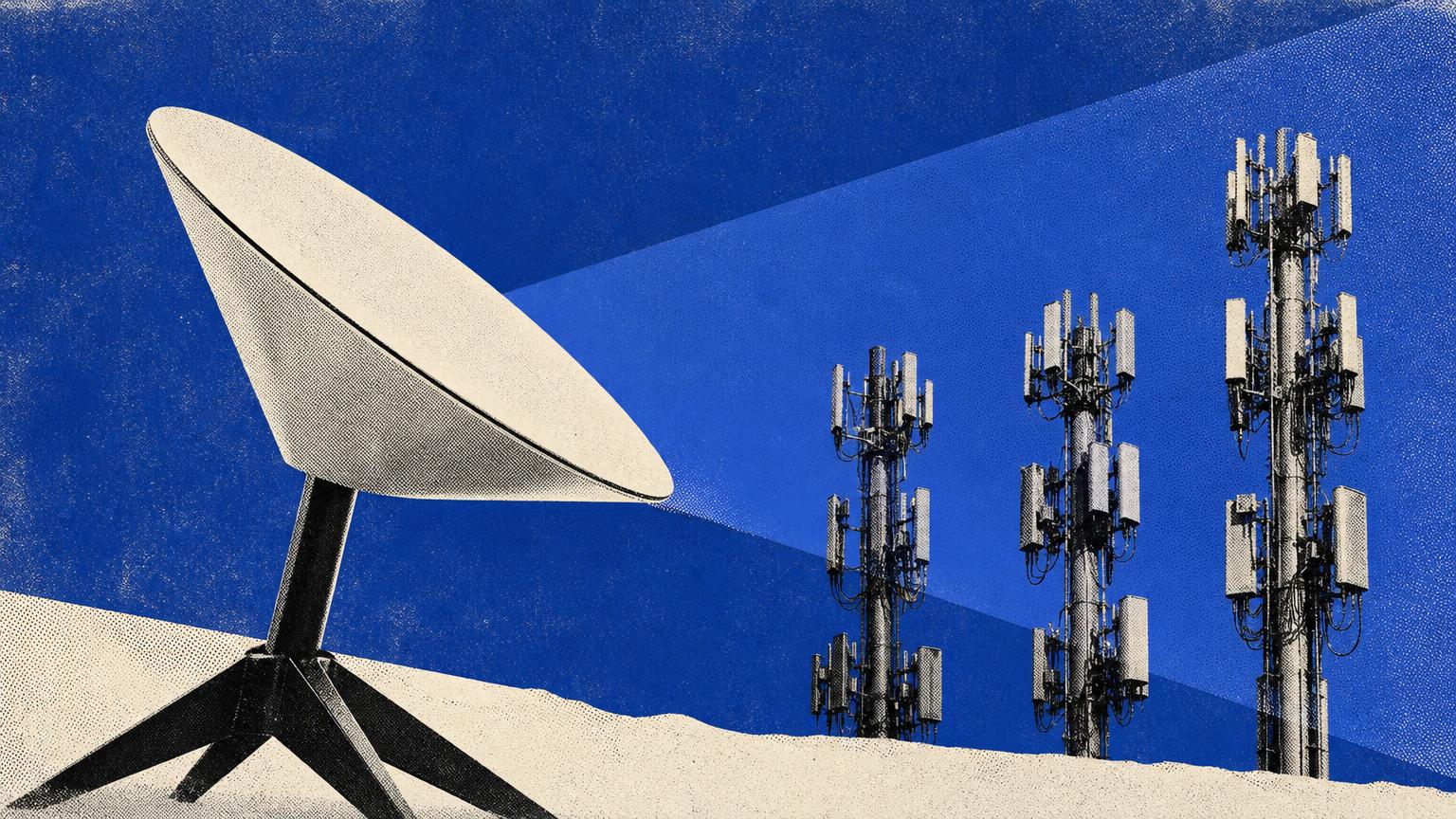
Topics: Stocks
Your phone company just had one of its worst days in decades.
On Thursday evening, SpaceX agreed to buy a block of wireless airwaves from Grain Management, a private investment firm. The companies didn't share the price, but the Wall Street Journal reported SpaceX is paying $8 billion in cash.
Investors read it as SpaceX getting serious about selling phone service directly to Americans. By Friday's close, the three big carriers had lost tens of billions of dollars in market value:
- T-Mobile (TMUS): −13.3%, to $148.58
- AT&T (T): −9.9%, to $22.17
- Verizon (VZ): −8.8%, to $41.65
That happened on a day the S&P 500 rose 0.6%. This wasn't the market. It was SpaceX.
What SpaceX actually bought
Airwaves, known in the industry as spectrum, are the invisible lanes that carry your calls and data. You can't run a phone network without them, and the government only licenses so many.
This batch is "low-band" spectrum, the kind that travels long distances and passes through walls. That matters because Starlink's satellites are great in an open field and much weaker inside a building. Low-band airwaves help fix that.
It isn't SpaceX's first purchase. In 2025 it agreed to buy airwaves from EchoStar for more than $17 billion. Add it up, and SpaceX is building a real phone business piece by piece.
Why Wall Street is nervous
SpaceX's president, Gwynne Shotwell, has said she expects Starlink Mobile to "capture a significant portion of their customers." Until now, carriers treated that as talk. Analysts at Evercore ISI said the days of treating it as a "science project" are ending.
For Verizon and AT&T, the fear is simple: their businesses are mature, growth is slow, and a new rival with deep pockets could force price cuts. Even a small price war hits profits.
The case for calm
SpaceX is still far behind:
- Much less spectrum. Even with both deals, SpaceX would have roughly 79 MHz of these airwaves. AT&T, Verizon and T-Mobile each have roughly 280 to 380 MHz.
- No ground network yet. To work well in cities, SpaceX would need thousands of small towers on the ground. It says it plans to build them, but that takes years.
- Regulators still have to sign off. The Federal Communications Commission must approve the deal.
- The upgraded service is a 2027 story. SpaceX plans to launch its next-generation phone satellites next year, with much faster service targeted for the end of 2027.
What it means for you
- If you own Verizon or AT&T for the dividend, today doesn't change this quarter's payout. Both companies earn plenty of cash to cover it. The real question is whether a price war squeezes that cash over the next few years.
- If you own an S&P 500 index fund, these three are a small slice of it. A rough day for telecoms barely moves your account.
- Don't sell in a panic. Moves this big on a single headline often partly reverse once the details sink in. Some analysts are already calling the selloff overdone.
What to watch
The FCC's review of the deal, and whether SpaceX signs a partnership with any carrier. The biggest tell will come when AT&T, Verizon and T-Mobile report earnings later this month: listen for whether they talk about cutting prices to keep customers.