The Fed Just Raised Rates. And It's Not Done Yet.
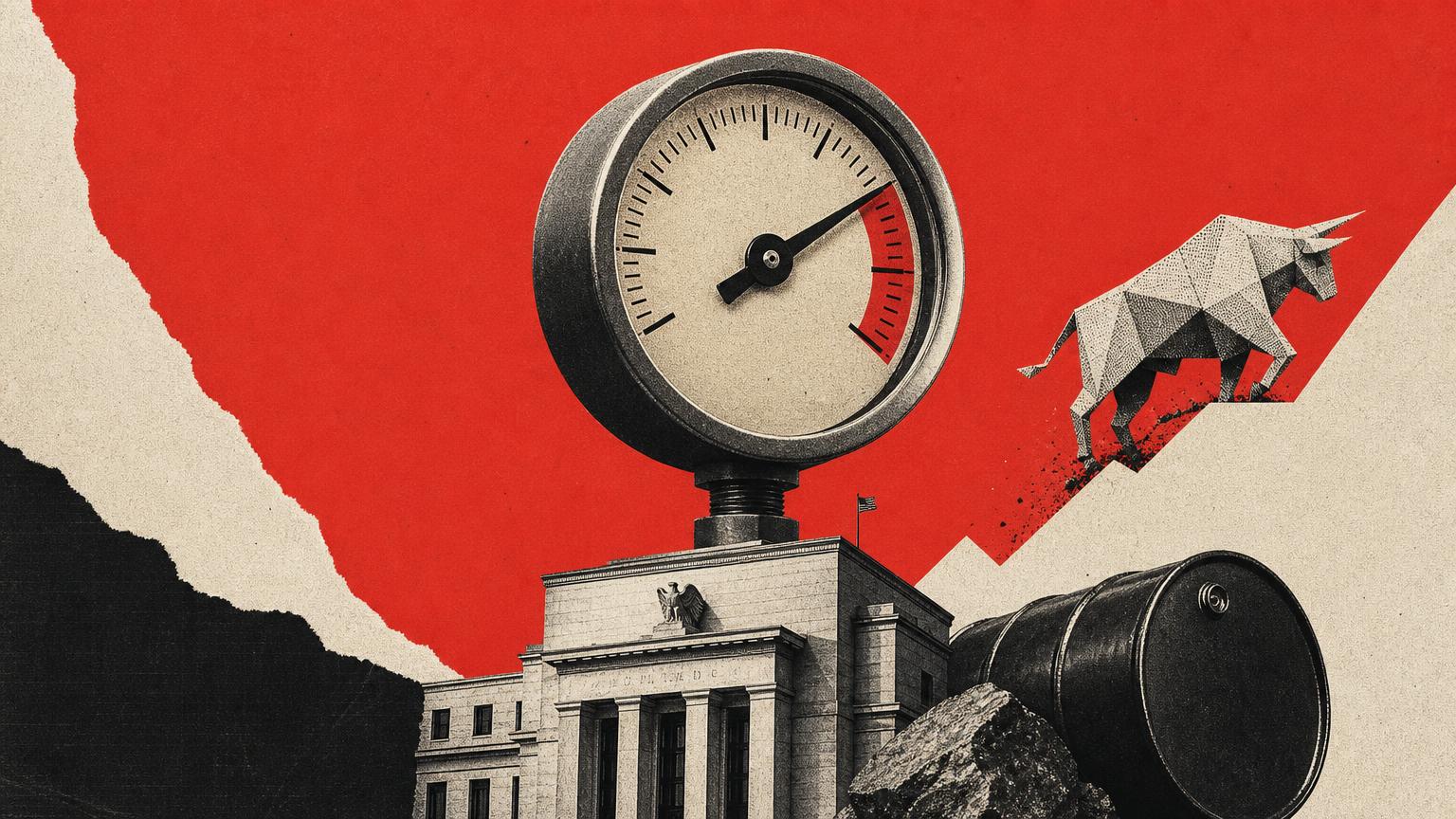
Stocks are climbing anyway as the Fed begins a new fight against inflation, oil remains above $100, and Treasury yields hover near 5%.
Topics: Macro Economics
KEY POINTS
The Fed raised rates for the first time since 2023.
The benchmark rate is now 3.75%–4.00% following today's quarter-point increase.Another hike could be coming.
Sixteen of 18 Fed policymakers expect at least one additional quarter-point increase before the end of the year.Wall Street isn't panicking.
Stocks moved higher following the announcement, with technology stocks leading the gains.Inflation remains the problem.
The Fed expects inflation to finish the year around 3.7% and doesn't currently project a return to its 2% target until 2029.
📊 MARKET SNAPSHOT
MARKET | LEVEL / MOVE | TODAY |
|---|---|---|
S&P 500 | +0.4% | 🟢 ▲ |
Nasdaq | +0.8% | 🟢 ▲ |
Dow | Roughly Flat | ⚪ — |
10-Year Treasury | 4.95% | 🔴 ▼ |
Brent Crude | $105.50 | 🔴 ▼ 3.0% |
FED RATE: 3.75%–4.00% 🟢 ▲ 25 basis points
Market figures are intraday and can change throughout the session.
🚨 The Fed Is Raising Rates Again
For the first time since 2023, the Federal Reserve is back in rate-hiking mode.
Policymakers voted unanimously today to increase the benchmark federal funds rate by 0.25 percentage point.
The move itself wasn't a major surprise.
Wall Street had been preparing for it.
The reason behind the move—and what the Fed might do next—is considerably more important.
Inflation has remained stubbornly above the central bank's 2% target, while a surge in energy prices has created another potential source of inflationary pressure.
Oil's move above $100 per barrel has complicated the picture even further.
Higher energy prices don't just mean more expensive gasoline.
They can increase transportation costs, manufacturing expenses, shipping costs and ultimately the prices consumers pay for everyday goods.
That puts the Fed in a difficult position.
It wants to control inflation without unnecessarily damaging an economy that has remained surprisingly resilient.
For now, policymakers appear increasingly concerned that inflation remains the bigger threat.
👀 The Fed May Not Be Finished
This could ultimately be the most important development from today's meeting.
The Fed's updated projections show 16 of its 18 policymakers expect at least one more quarter-point rate increase before the end of the year.
If that happens, the benchmark rate would climb to 4.00%–4.25%.
Think about how dramatically the conversation has changed.
For much of the previous cycle, investors were asking:
When will the Fed cut rates?
Now the question is becoming:
How high will the Fed have to go?
That's a major change for financial markets.
Higher rates increase borrowing costs for consumers and businesses, while also making bonds and other fixed-income investments more competitive with stocks.
And if inflation refuses to cooperate, today's hike may ultimately look less like an isolated move and more like the beginning of another tightening cycle.
📈 Stocks Are Rising Anyway
Here's the interesting part:
Wall Street isn't panicking.
Following the Fed's announcement, the S&P 500 was up roughly 0.4%, while the technology-heavy Nasdaq gained around 0.8%.
The Dow was roughly flat.
Why would stocks rise on the same day the Fed raises interest rates?
Because markets don't simply react to whether news is good or bad.
They react to whether the news is better or worse than expected.
Investors had already spent days preparing for a quarter-point hike.
So when the Fed delivered exactly that, there was no major surprise for markets to digest.
The bigger question is what comes next.
If inflation continues running hot and the Fed becomes more aggressive, the market could face a much more difficult test.
But for now, investors appear to be taking today's first hike in stride.
💰 The 10-Year Treasury Is Flirting With 5%
While everyone watches the stock market, one of the most important numbers in finance is sitting just below a major psychological level.
The 10-year U.S. Treasury yield is around 4.95%.
It recently crossed 5%, reaching territory not seen in nearly two decades.
That matters far beyond the bond market.
The 10-year Treasury influences borrowing costs throughout the economy.
Mortgage rates, corporate financing and other forms of credit can all be affected by movements in government bond yields.
But there's another reason stock investors should pay attention.
At nearly 5%, government debt becomes a much more serious competitor for investor capital.
An investor deciding where to put money has to ask:
How much additional return do I expect from stocks in exchange for taking substantially more risk?
The higher Treasury yields climb, the harder that question becomes.
That's why the bond market may be every bit as important as the S&P 500 over the next several months.
🛢️ Oil Drops — But It's Still Above $100
Investors did get some relief from another major source of inflation today.
Brent crude fell roughly 3% to around $105.50 per barrel.
But there's a catch.
Oil is falling from extremely elevated levels.
Crude remains comfortably above $100 after the widening conflict in the Middle East pushed energy prices sharply higher.
And the longer oil remains expensive, the greater the potential impact on inflation.
Energy touches almost everything.
Planes need fuel.
Trucks need diesel.
Factories need energy.
Products need to be transported.
When those costs rise, companies eventually have to absorb them, become more efficient—or pass some of them on to consumers.
That's one reason oil could play an unusually important role in determining the Fed's next move.
If crude continues falling, some inflationary pressure could ease.
If oil surges again, the Fed's job becomes much harder.
🔥 Inflation Could Stay Higher for Longer
The Fed also delivered another uncomfortable message today:
Inflation may take years to fully normalize.
Policymakers now expect their preferred inflation measure to finish the year around 3.7%.
That's well above the Fed's long-term 2% target.
And according to the Fed's latest projections, inflation isn't expected to return to 2% until 2029.
At the same time, the economy has remained relatively resilient.
The Fed raised its economic growth forecast to around 2.3% and projects unemployment at approximately 4.1% at year-end.
That's an unusual combination.
Economic growth remains positive.
Unemployment remains relatively contained.
But inflation is still too high.
That resilience gives the Fed more room to focus on bringing prices under control—even if doing so requires keeping interest rates higher.
🤖 AI Is Facing a New Kind of Test
There's another reason today's rate decision matters for investors:
The AI boom requires an extraordinary amount of money.
The world's largest technology companies are spending enormous sums building data centers, buying chips, expanding power infrastructure and developing increasingly powerful AI models.
During periods of cheap money, massive capital expenditures are easier to finance and justify.
Higher interest rates change that calculation.
Capital becomes more expensive.
Future profits become less valuable in today's dollars.
And investors become more demanding about when those enormous AI investments will actually produce returns.
That doesn't mean the AI boom is ending.
Far from it.
But the next phase could look different from the first.
Investors may increasingly distinguish between companies that are simply spending billions on AI and companies capable of turning AI into billions of dollars in sustainable profits.
That could make earnings and cash flow increasingly important as the AI trade matures.
🔭 WHAT WE'RE WATCHING NEXT
Today's Fed meeting answers one major question.
It creates several others.
Inflation: Does price growth finally start moving convincingly toward 2%?
Oil: Can crude fall back below $100, or will geopolitical risks keep energy prices elevated?
Treasury yields: Can the 10-year remain near 5% without putting significant pressure on stocks and the economy?
Corporate earnings: Can businesses continue growing profits while financing becomes more expensive?
AI spending: Will hundreds of billions of dollars in infrastructure investment translate into equally impressive profits?
The next Fed meeting: Does today's quarter-point hike prove sufficient—or does the Fed raise rates again?
The market handled today's decision surprisingly well.
But the larger story is only beginning.
For years, investors became accustomed to asking when interest rates would come down.
Today, the Federal Reserve sent a very different message:
The fight against inflation isn't over just yet.