
Oil Tops $100 as Stocks Slide: Dow Falls 405 Points
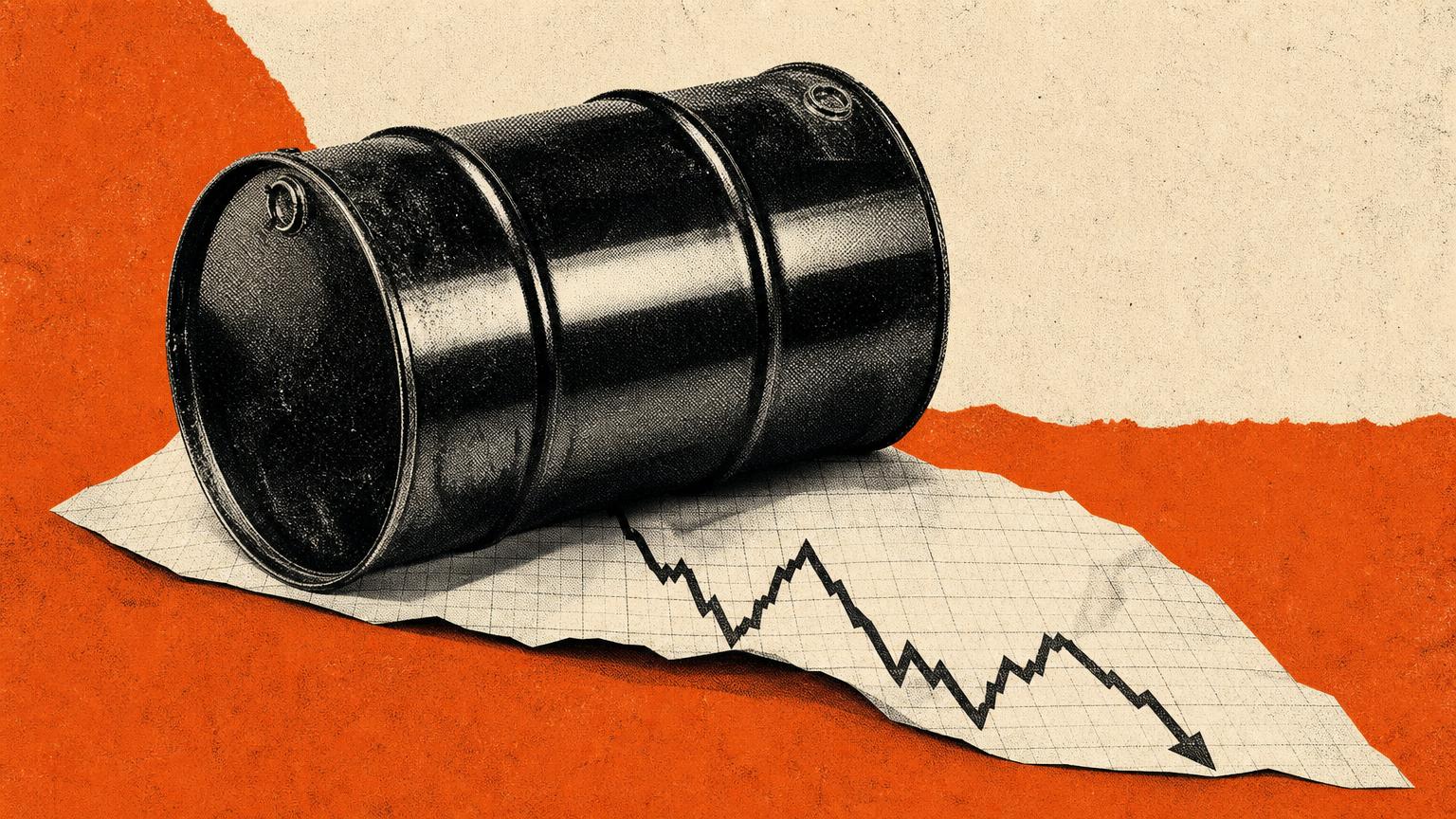
Crude has broken above a key psychological level, sending stocks lower as investors brace for fresh inflation data and a potentially tougher road for interest rates.
Topics: Stocks
KEY POINTS
Oil Breaks $100: Brent crude jumped 3.4% to $101.21 a barrel, its highest level since May, as Middle East tensions threaten global energy supplies.
Dow Drops 405 Points: The Dow fell 0.77%, while the S&P 500 lost 0.48% and the Nasdaq declined 0.64%, marking a third straight session of losses.
Inflation Is Back in Focus: Higher energy prices could push consumer prices higher and make it harder for the Federal Reserve to cut rates.
CPI Could Move Markets: Investors are now looking ahead to Friday's inflation report, which could influence expectations for the Fed's September decision.
Oil Has Crossed the Line
Wall Street has a new problem.
Brent crude surged above $100 a barrel Wednesday, reaching roughly $101.21 before settling at its highest level since May.
U.S. crude also climbed sharply, finishing around $96 a barrel.
The move comes as escalating conflict involving the U.S. and Iran raises concerns about disruptions to energy shipments through the Middle East.
For investors, the $100 level matters.
Not because $100 is some magical price that automatically crashes stocks, but because sustained higher oil prices can work their way through the entire economy.
Transportation gets more expensive.
Manufacturing costs can rise.
Gasoline and diesel prices increase.
And eventually, some of those higher costs can show up in consumer prices.
That's where today's market selloff becomes more important.
Stocks Are Feeling the Pressure
The Dow dropped 405 points, or 0.77%, on Wednesday.
The S&P 500 fell 0.48%, while the Nasdaq lost 0.64%.
It was the third consecutive losing session for all three major indexes.
Small-cap stocks were hit even harder.
The Russell 2000 dropped about 1.3%, showing that investors were becoming more cautious toward companies that can be particularly sensitive to higher borrowing costs and economic uncertainty.
But there was one obvious winner.
Energy stocks.
The S&P 500 energy sector gained roughly 1.1% as crude prices surged.
That creates an important distinction for investors.
A $100 barrel of oil isn't necessarily bad for the entire stock market equally.
For oil producers, higher crude prices can mean higher revenue and potentially stronger profits.
For airlines, transportation companies and other fuel-intensive businesses, the opposite can be true.
The Bigger Problem Is Inflation
Here's where things get more complicated.
Oil prices don't just affect energy companies.
They can affect inflation.
And inflation is one of the biggest variables currently facing the Federal Reserve.
The 10-year Treasury yield also climbed toward 4.85%, reflecting growing concern about inflation and interest rates.
That's important because higher Treasury yields can make stocks less attractive relative to bonds while also increasing borrowing costs for companies.
It can be particularly painful for high-growth stocks whose valuations depend heavily on earnings expected years into the future.
In other words, investors aren't simply asking:
"Where is oil going?"
They're asking:
"What does $100 oil mean for interest rates?"
Friday Could Be the Next Big Test
The next major catalyst arrives Friday.
The August Consumer Price Index report is due, giving investors another look at the direction of inflation.
That's particularly important now because oil has surged sharply.
A hotter-than-expected inflation reading could reinforce expectations that the Fed needs to keep rates higher for longer, or potentially raise rates at its upcoming meeting.
A cooler reading could ease some of that pressure.
Investors will also get the Producer Price Index on Thursday, providing another look at price pressures facing businesses.
Together, those reports could determine whether this week's market weakness is simply a temporary pullback or the beginning of a larger repricing.
Where the Opportunities Could Be
The market's reaction to $100 oil is creating a wider gap between potential winners and losers.
Energy companies are benefiting from higher crude prices.
Meanwhile, businesses with high fuel costs or heavy debt loads could face increasing pressure if oil and interest rates remain elevated.
That's why investors shouldn't necessarily view today's decline as a reason to sell everything.
Instead, it may be a reason to look more closely at which companies can thrive in a higher-cost environment.
Companies with strong balance sheets, pricing power and exposure to rising energy prices could be better positioned than highly leveraged businesses with thin margins.
And if oil eventually retreats, some of the stocks being punished today could become attractive opportunities.
The Bottom Line
Oil crossing $100 is a psychological milestone, but the bigger issue is what happens next.
If crude quickly falls back below $100, today's market reaction could prove temporary.
If oil remains above $100 for an extended period, investors may have to contend with higher inflation, higher interest rates and slower economic growth.
That's a much more difficult environment for stocks.
For now, Wall Street is waiting for the inflation data.
The next big market move could depend less on where oil is today and more on what $100 oil does to inflation tomorrow.