
Investors Just Pulled $22 Billion From U.S. Stocks. Is This a Warning Sign or a Buying Opportunity?
Investors just recorded the biggest weekly withdrawal from U.S. equity funds in months. But the numbers may tell a more complicated story than the headline suggests.
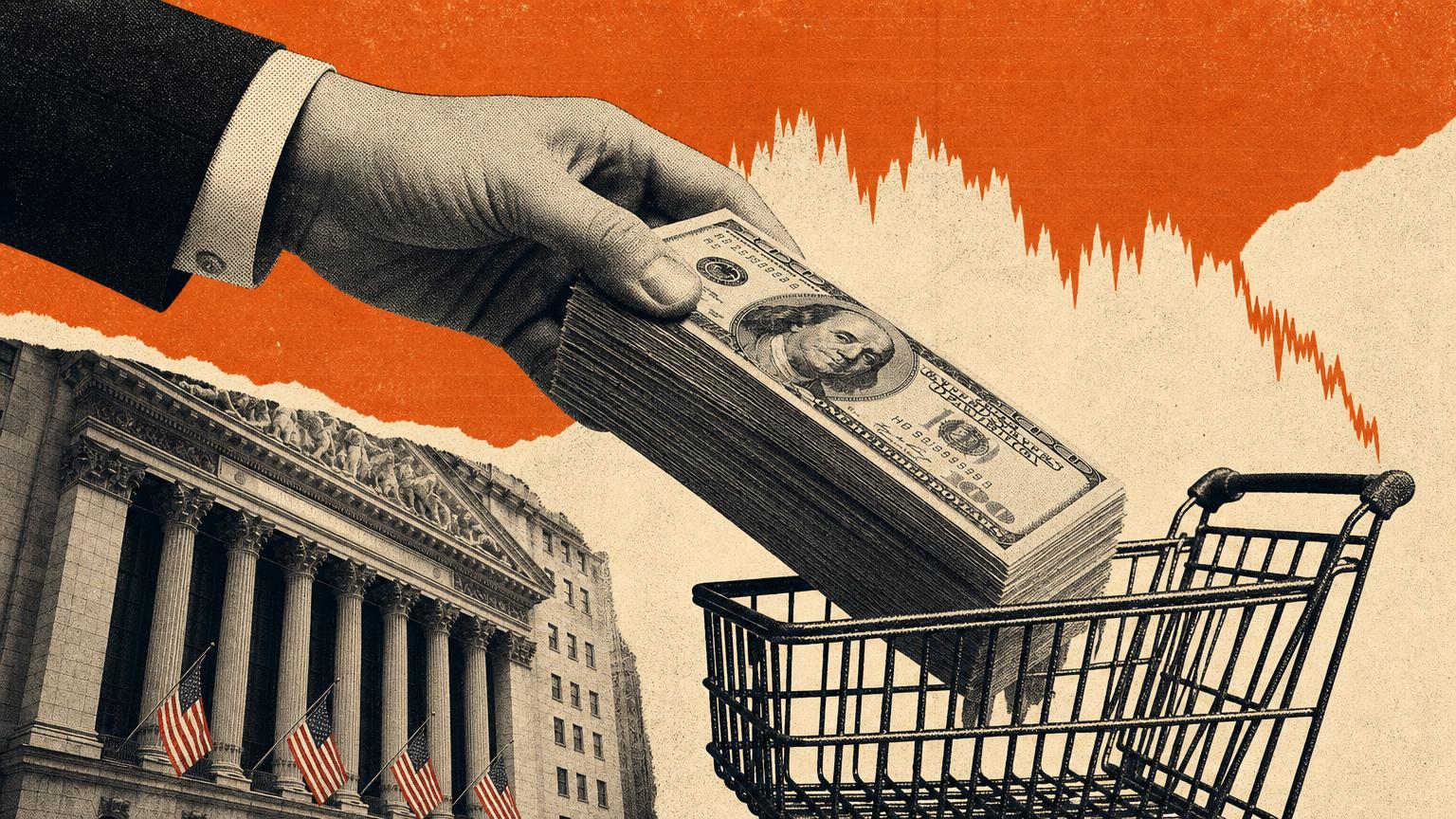
Topics: Stocks
KEY POINTS
Investors pulled $22.33 billion from U.S. equity funds, the largest weekly outflow since March.
The selling was concentrated in large-cap funds, while mid-cap and small-cap funds still attracted new money.
Investors are increasingly moving toward bonds, which are offering more attractive returns as interest rates remain elevated.
The big question is market breadth: Can the rest of the market start participating in the rally, or will stocks remain dependent on a handful of mega-cap AI winners?
Investors are getting nervous.
During the week ending August 26, investors pulled a net $22.33 billion from U.S. equity funds, marking the largest weekly outflow since March.
On the surface, that sounds like a major warning sign.
Money is leaving stocks. Investors are becoming more cautious. And after a powerful market rally, some people are naturally asking whether the next major move could be lower.
But looking beneath the headline tells a more interesting story.
Because investors didn't simply abandon the market.
They changed where they were putting their money.
Investors Pulled Money From Large-Cap Stocks
The biggest withdrawals came from large-cap equity funds.
Investors pulled nearly $25 billion from large-cap funds, while mid-cap and small-cap funds actually saw money flow in.
That distinction matters.
It suggests investors may not be completely bearish on stocks.
Instead, some investors could simply be reducing exposure to the biggest companies after a long period of strong performance.
Large technology companies have played an enormous role in driving the market higher.
Nvidia, Microsoft, Alphabet, Meta, Amazon, and other mega-cap companies have attracted huge amounts of investor capital as Wall Street has become increasingly optimistic about artificial intelligence.
But when a small group of companies becomes responsible for a large portion of the market's gains, investors eventually start asking an important question:
How much more upside is already priced in?
The AI Trade Is Still Strong, But Expectations Are High
The outflows came just before one of the market's biggest events: Nvidia's earnings report.
That wasn't a coincidence.
Nvidia has become one of the most important companies in the stock market.
Its results are increasingly viewed as a test of the entire AI investment boom.
Fortunately for investors, Nvidia delivered another strong forecast, projecting significant revenue growth in the coming year. That helped ease some concerns about whether demand for AI infrastructure is beginning to slow.
But strong earnings don't automatically mean investors will continue pushing valuations higher.
That's the challenge.
The AI story is still strong.
The businesses are still growing.
But expectations are also extremely high.
And when expectations become high enough, even good news can sometimes fail to push a stock higher.
Investors Are Moving Into Bonds
While money left U.S. equity funds, bond funds continued attracting investors.
U.S. bond funds recorded their 19th consecutive week of inflows, with investors adding more than $7 billion during the latest week.
That could be a sign that investors are becoming more defensive.
But it also reflects something simpler:
Bonds are finally offering meaningful returns again.
For much of the past decade, investors had few attractive alternatives to stocks.
Interest rates were extremely low, and bonds offered relatively limited income.
That's no longer the case.
With higher interest rates, investors can earn meaningful returns from government bonds and other fixed-income investments without taking the same level of risk associated with stocks.
That changes the investment landscape.
Stocks are no longer competing against near-zero interest rates.
They're competing against real yields.
Higher Rates Are Making Investors Think Twice
The timing of these outflows is particularly important.
Investors have been trying to understand what the Federal Reserve will do next.
For much of the year, Wall Street had hoped that interest rates would begin moving lower.
But concerns about inflation have complicated that outlook.
Following recent comments from Federal Reserve Chair Kevin Warsh, investors increased their expectations that the Fed could raise rates at its upcoming September meeting.
That matters for stocks.
Higher interest rates can reduce the value investors are willing to pay for future corporate earnings.
They can also increase borrowing costs for consumers and businesses.
And they give investors another option.
If investors can earn attractive returns from relatively safe bonds, they may become less willing to pay extremely high valuations for stocks.
So, Is This a Warning Sign?
Maybe.
But one week of fund outflows doesn't necessarily mean a market crash is coming.
Fund flows can be volatile.
Investors frequently move money in and out of different types of funds for reasons that have little to do with their long-term view of the stock market.
What's more interesting is where the money is moving.
Large-cap stocks saw significant withdrawals.
Technology-focused funds still attracted money.
Mid-cap and small-cap funds saw inflows.
Bond funds continued their long streak of positive flows.
That doesn't look like investors running for the exits.
It looks more like investors becoming selective.
And that could become one of the most important themes for the market going forward.
What Investors Should Watch Next
The market now faces several important tests.
1. The Jobs Report
The next employment report could provide another important clue about the health of the U.S. economy and the direction of Federal Reserve policy.
2. Interest Rates
If Treasury yields continue rising, expensive stocks could face increasing pressure.
3. Corporate Earnings
Strong earnings have helped support the market. Investors will want to see whether companies outside the AI and mega-cap technology sectors can continue delivering growth.
4. Market Breadth
Perhaps the biggest question is whether more stocks can begin participating in the rally.
A healthier market is usually one where gains are spread across different sectors and companies, rather than being driven by only a handful of giant businesses.
The Bottom Line
The $22 billion outflow from U.S. equity funds is worth paying attention to.
But it isn't necessarily a sign that investors believe the bull market is over.
The more interesting story is that investors appear to be becoming more selective.
Some money is leaving large-cap stocks.
Some is moving into smaller companies.
Some is moving into bonds.
And technology investors are still betting on artificial intelligence.
That suggests the market may be entering a new phase.
Instead of simply buying everything, investors may start asking tougher questions about valuations, interest rates, and where future earnings growth will come from.
The biggest question now isn't whether investors are bullish or bearish.
It's whether the market's next gains can come from more than just a handful of companies.
That's what we're watching.